One quiet evening at dinner, my husband, our then three-and-a-half-year-old daughter, and I were gathered around the table, sharing food and small stories from the day. Papa, without thinking, licked his lips.
Our daughter gasped, eyes wide with toddler alarm, and said, “Papa, eat like a lady.”
Surprised and amused, he smiled and asked, “And how might a lady eat, my dear?”
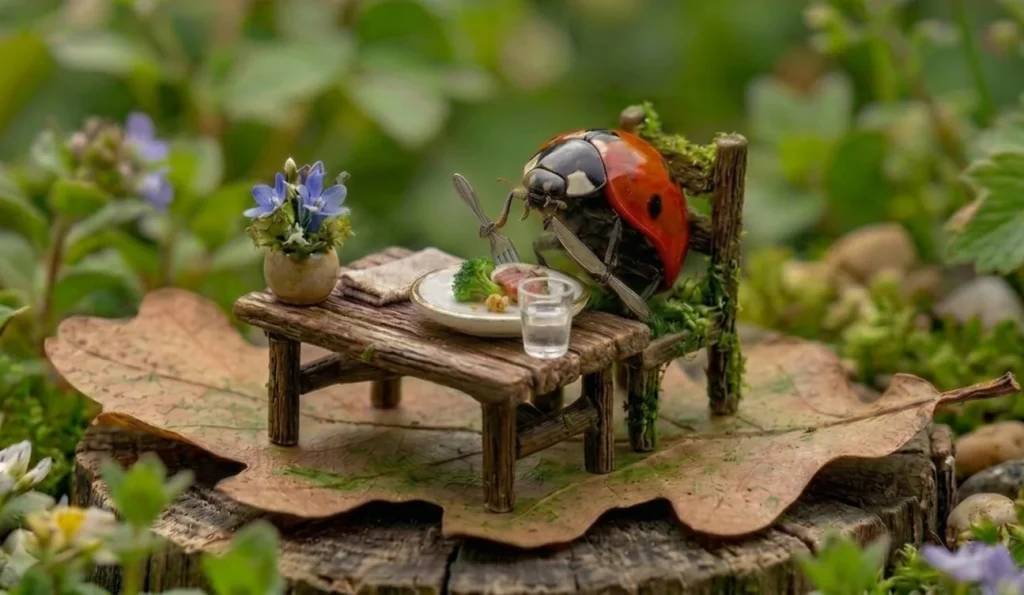 Without a moment’s hesitation, she slid off her chair, tiny feet quick with purpose, disappeared for a moment, and returned clutching a picture book. She flipped it open, pointed with very serious toddler logic to a ladybird and declared, “Like this, Papa.”
We burst into laughter, her certainty lighting up the room. And I couldn’t help but smile to myself, so much for an etiquette coach. One might well wonder how skilled a coach I really am when what was received had very little to do with what was delivered.
A few evenings later, the ladybird had taken up residence at our table. In my mind, she was still perched there: glass on the wrong side, napkin ignored, cutlery wrongly held and more like tools of exploration than instruments of dining. It was wonderfully wrong, and exactly right for a three-year-old’s imagination.
And yet, I do not give up that easily.
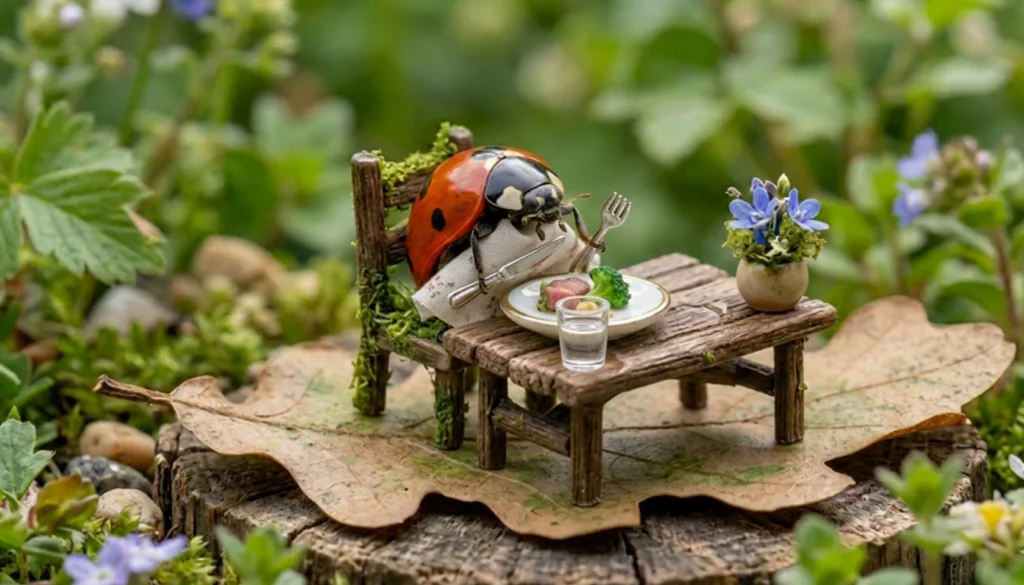 If the ladybird was going to be our household model, she deserved a gentle upgrade: the glass finding its way to the right side, the napkin finally invited into service, her tiny cutlery held with something resembling intention.
Somewhere between the first photograph and the second, she turned from pure toddler logic into a small creature who might almost pass at dinner with grandparents, or at least not alarm them completely.
In other rooms, people make their own small upgrades over time, through experience, quiet correction, and the wish to be at ease without making it harder for anyone else to be there too.
If we can be patient with ladybirds and small humans learning their way at the table, perhaps we can be more patient with ourselves and one another in larger rooms as well.
Yours in manners,
Rabab
P.S. Results may vary (widely).